

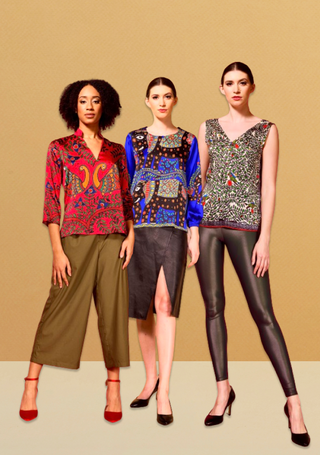

If you've ever stopped mid-scroll to stare at a garment covered in intricate fish, peacocks, and vines — each line painted entirely by hand — you've likely encountered Madhubani art. This 2,500-year-old Indian folk art is one of the world's oldest living painting traditions, and at Naytra Couture, it's the soul of everything we make.
What Is Madhubani Art?
Madhubani painting — also called Mithila art — originated in the Mithila region of Bihar, India. For centuries, women painted these elaborate murals on the walls and floors of their homes to mark weddings, festivals, and harvests. The knowledge passed from mother to daughter, generation after generation, making Madhubani one of the rare major art forms practiced almost exclusively by women.
Traditional Madhubani paintings use natural pigments — charcoal, turmeric, indigo, and rice paste — and are defined by their geometry: no empty space is left unfilled, every inch dense with meaning.
The Meaning Behind Madhubani Motifs
Nothing in a Madhubani painting is decorative filler. Common motifs include:
- Fish (Matsya) — fertility, abundance, and good fortune
- Peacocks (Mayura) — grace, beauty, and immortality
- The tree of life — connection between earth and sky
- Sun and moon — the balance of cosmic forces
When you wear a Madhubani-painted garment, you're wearing a story — not a print.
From Village Walls to Sustainable Silk
At Naytra Couture, we collaborate directly with women Madhubani artisans who hand-paint each design. Their artwork is then brought to life on pure organic mulberry silk using eco-friendly printing techniques and natural, non-toxic dyes in our OEKO-TEX certified facility.
Every artisan is paid a living wage — because preserving a 2,500-year-old tradition means sustaining the women who carry it. Explore our sustainable silk dresses, silk tunics, and organic silk scarves, each one a wearable piece of living heritage.
Why Madhubani Matters for Ethical Fashion
Fast fashion copies folk motifs without credit or compensation. Ethical fashion does the opposite: it names the art, honors the artist, and pays her fairly. When you choose authentic Madhubani clothing, you keep an ancient women's art form economically alive — and you wear something no machine could ever replicate.
Wear the story. Sustain the art. Shop the collection.